Written by the Janitva IVF team · Medically reviewed by Dr. Arpita Sarmah, MBBS, MD. (Obs & Gyn), Fellowship in ART · Last updated June 2026
Once a woman decides to preserve her fertility, a second decision lands almost immediately: should you freeze your eggs, or fertilise them now and freeze embryos? Clinics will sometimes nudge you toward embryos by pointing at slightly better success numbers. The numbers are real, but they’re not the whole story — and for a lot of women, they’re not even the part that matters most. Here’s how to actually think it through.
Table of Contents
ToggleThe one real difference: who owns what you freeze
Strip away the science and the choice comes down to one thing: control.
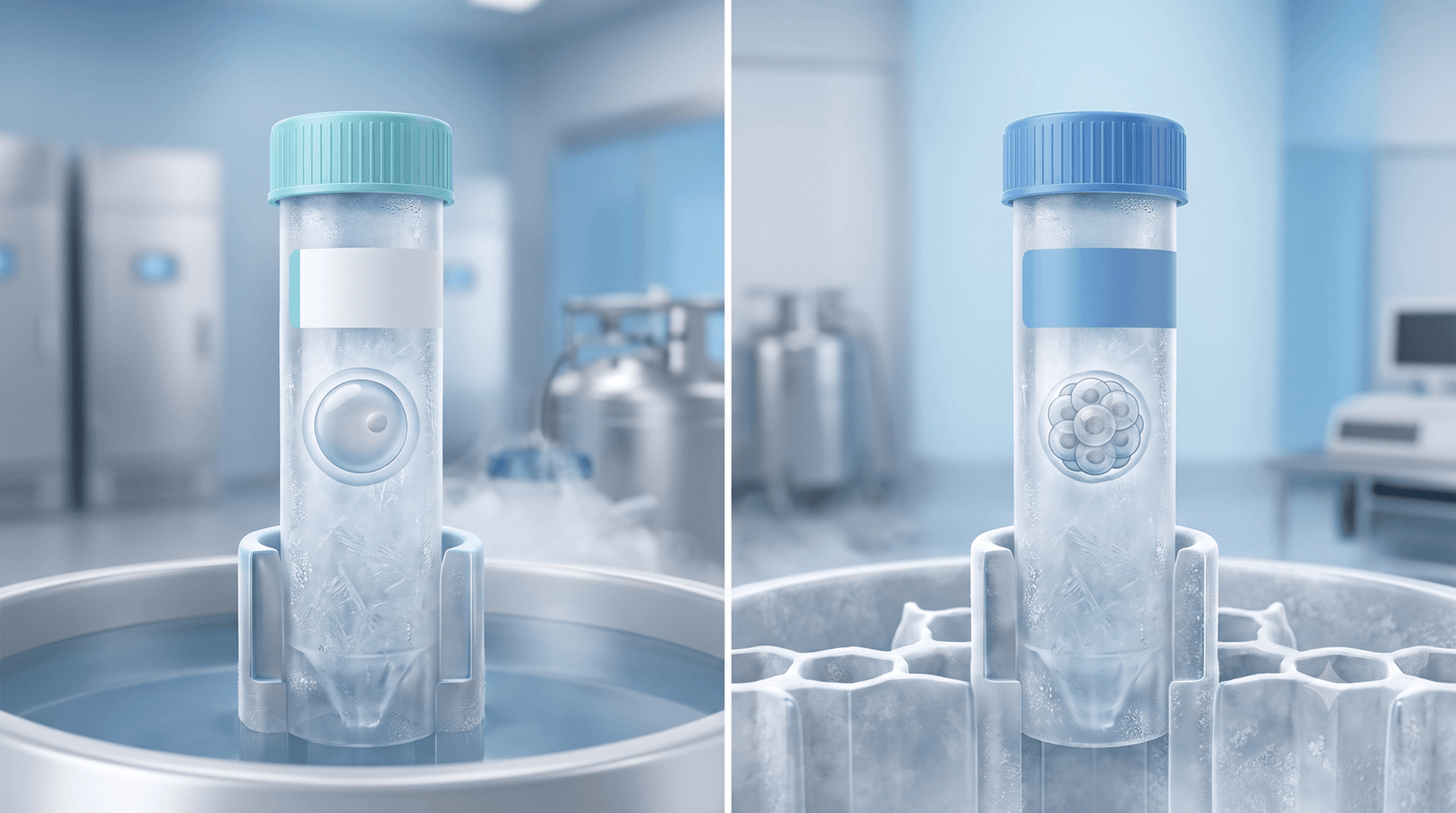
- A frozen egg is yours, and only yours. It’s your single cell. No sperm is involved yet, so no one else has any say over it. You decide if, when, and with whom you ever use it.
- A frozen embryo belongs to two people. To make an embryo, you need sperm now — from a partner or a donor. That means the embryo is jointly owned, and its future use depends on both parties agreeing.
Everything else in this decision flows from that single difference.
Success and survival: closer than you’d think
For years, embryos had a clear edge, because old freezing methods were rough on delicate single eggs. Then vitrification (flash-freezing) arrived and largely closed the gap. Today, roughly 90% of frozen eggs survive thawing, against about 95% of embryos — a real but modest difference.
Embryos do still carry a small practical advantage: because the eggs are already fertilised, you know how many viable embryos you have, which removes some of the guesswork. But here’s the honest statistical point clinics rarely spell out — it takes several eggs to make one embryo either way. Whether you freeze ten eggs now and fertilise them later, or fertilise them now and freeze the three embryos that develop, you end up with a similar number of real chances at a pregnancy. The headline “embryos work better” oversells a thin margin.
The catch with embryos nobody mentions upfront
This is the part that turns the decision for many women. With embryo freezing, both partners must consent to an embryo being used — and that consent can be withdrawn before the embryo is transferred.
Play that forward. You freeze embryos with a partner. The relationship ends. In most situations, you now cannot use those embryos without your ex-partner’s agreement — and a separation is not when agreements come easily. Couples in this position can find their embryos frozen in place by a disagreement, unusable, sometimes for years. If you used donor sperm instead, there’s a smaller but similar risk of the donor’s consent being an issue.
Frozen eggs sidestep all of this entirely. Because they’re yours alone, no one can block you from using them, and no breakup can take that option away.
When egg freezing is the better fit
Egg freezing usually makes more sense if you:
- are single, or not certain your current partner is the person you want to have children with;
- want to keep full control and avoid any future consent tangle;
- aren’t ready to decide on a sperm source yet, and don’t want to commit to a donor now;
- are freezing mainly to buy time against your biological clock while life sorts itself out.
For most women freezing for these reasons, egg freezing in Guwahati is the cleaner, lower-stress choice — it preserves your options without locking you into anything.
When embryo freezing makes more sense
Embryo freezing can be the better call if you:
- are in a committed relationship and confident your partner is your intended co-parent;
- are already going through IVF and want to freeze the extra good embryos from that cycle for a future attempt or a sibling;
- have a clear, settled plan about whose sperm you want to use.
In those situations, the small survival edge and the certainty of knowing your embryo count are genuine pluses, and the consent issue is far less of a worry because the plan is stable.
A middle path: the split cycle
If you genuinely can’t decide — say you’re in a relationship but not 100% sure about the future — there’s a sensible compromise some women choose: a split cycle. You freeze some of your retrieved eggs as eggs (yours alone), and fertilise the rest to freeze as embryos with your partner. You get the security of the embryos and a personal backup that’s entirely yours, whatever happens. It costs a bit more, but for the right person it buys real peace of mind. Your doctor can tell you whether it fits your numbers.
What’s the same either way
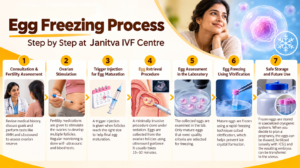
Whichever you choose, the front half of the process is identical: the same hormone injections, the same monitoring, the same egg-retrieval procedure. The fork only appears after retrieval — freeze the eggs as they are, or fertilise them first. The upfront medical experience, and most of the cost difference, is broadly similar, with embryo freezing adding the fertilisation step now rather than later.
The right answer isn’t about which is “better” in the abstract. It’s about your situation: your relationship, your certainty, and how much you value keeping the decision entirely in your own hands. A good fertility specialist will help you weigh it honestly, not push you toward whatever sounds most impressive.
Frequently Asked Questions (FAQ)
Slightly, on paper — embryos survive thawing at marginally higher rates and remove some guesswork. But because several eggs make one embryo either way, the real-world difference in your chances is small.
Usually eggs. Embryo freezing requires choosing a sperm source now, while egg freezing keeps your options fully open and under your sole control.
In most cases, you can't use the embryos without both partners' consent, which can be withdrawn before transfer. A separation can leave embryos unusable — a key reason some women prefer freezing eggs.
it's called a split cycle. You freeze some eggs as your own and fertilise the rest into embryos. It costs a little more but gives you both security and a personal backup.
The upfront cost is broadly similar, since the retrieval is identical. Embryo freezing adds the fertilisation (ICSI) step now; with egg freezing you pay that later when you use the eggs.